/59748.tmb-300v.png?sfvrsn=9885965b_2 "For the future - publication thumbnail")
“We have lost five community members to typhoon Sinlaku — including a newborn who died during childbirth when the mother’s transfer to the hospital was hampered on account of a roadblock,” recalls Dr Dorina Fred, Chief of Public Health, Department of Health Services, Chuuk State in the Federated States of Micronesia. “We sought WHO technical assistance to support our emergency response. WHO-deployed staff enabled us to activate our emergency operations centre and establish systems for health assessments and reporting. Working alongside the health team, WHO supported health facility assessments and analysis of the data that we were recording through our outreach services,” she added.
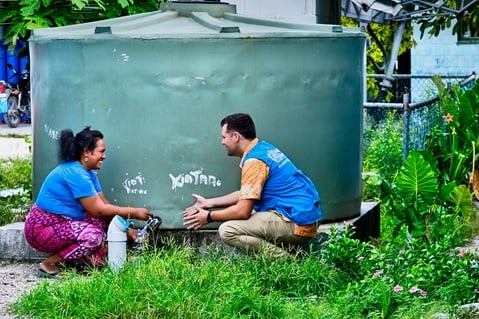
/countries/micronesia-federated-states-of/who-response.jpg?sfvrsn=bb33c77c_3 "WHO emergency response to typhoon Sinlaku") Photo caption: WHO team joins health outreach staff from Chuuk’s Department of Health Services to assess health facilities impacted by typhoon Sinlaku. Credit: WHO / A. Johannes
Photo caption: WHO team joins health outreach staff from Chuuk’s Department of Health Services to assess health facilities impacted by typhoon Sinlaku. Credit: WHO / A. Johannes
Super Typhoon Sinlaku, one of the strongest typhoons recorded since the start of 2026, left a trail of destruction across several islands of Chuuk State, in the Federated States of Micronesia, from 9-12 April 2026. Tens of thousands of residents were displaced, as the typhoon damaged homes, downed power lines, and destroyed food crops and water sources.
Dr Roderico Ofrin, WHO Representative for the Federated States of Micronesia, Republic of the Marshall Islands, and the Republic of Palau, joined Chuuk’s Department of Health Services team in assessing health needs and providing essential health services including catchup immunization, diagnosis, treatment and referrals. He noted: “The health dispensary in Polle Sapou, Faichuuk region that our team visited was destroyed by the typhoon. In Sapou, we recorded damaged health equipment, destroyed medicines — illustrative of urgent public health requirements — that we see mirrored across other villages as well.”
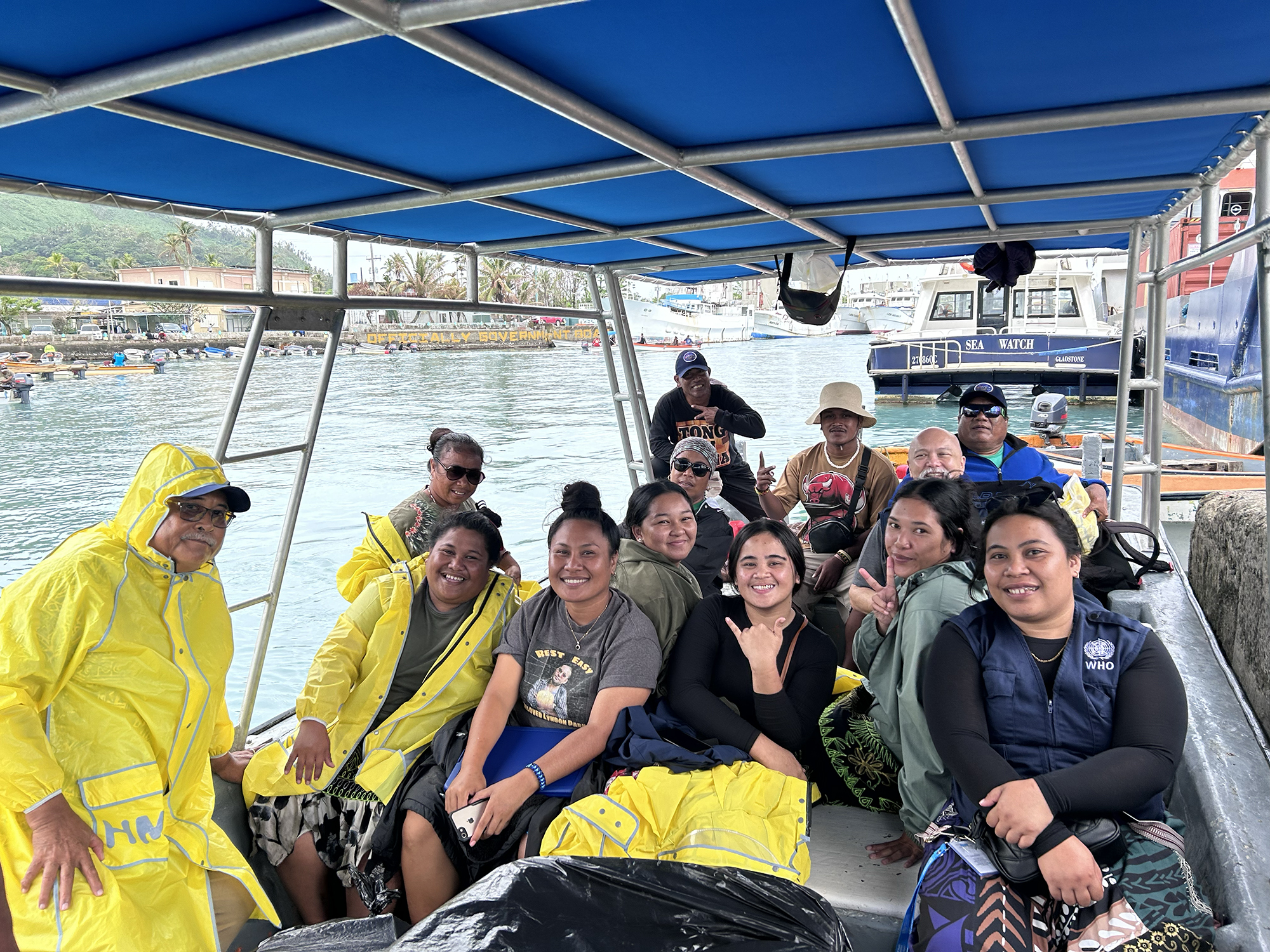 Photo caption: WHO team joins health outreach staff from Chuuk’s Department of Health Services to assess health facilities impacted by typhoon Sinlaku. Credit: WHO / A. Johannes
WHO also delivered essential medicines and supplies, to meet urgent health needs and prevent potential disease outbreaks in affected areas across Chuuk State, and continues to support the Department of Health Services in enabling the continuity of essential health services for affected communities.
Supporting health assessments and essential service delivery in hard-hit communities
Mofina Lewis, the health assistant in Polle Sapou village, reiterated the increase in health challenges brought on by the super typhoon. “I’ve seen an increase in illnesses in our community on account of contaminated water sources, destroyed sewage systems, and broken pipelines. We’re noting a lot of cases of waterborne diseases, influenza and pink eye. Unfortunately, our dispensary and medical supplies were destroyed during the typhoon, and we now must refer people to the main hospital in Chuuk, which is over an hour away by boat.”
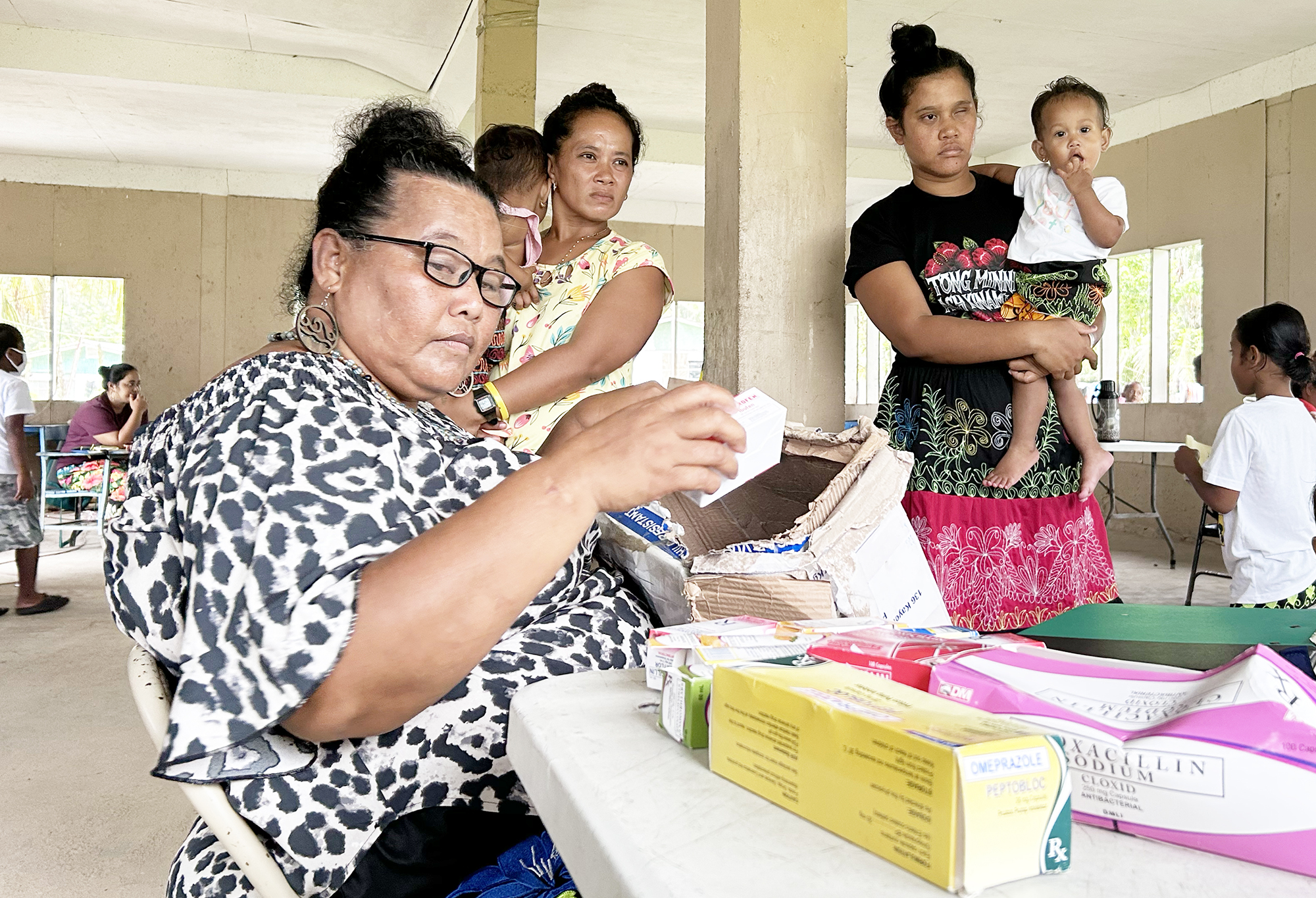 Photo caption: Mofina Lewis, the health assistant in Polle Sapou village, takes stock of medicines available in her community after typhoon Sinlaku. Credit: WHO / A. Johannes
Reiterating Mofina’s observations, Dr Sebastian Defang, a physician for public health services with Chuuk State, who is leading health assessments, noted: “I’ve been interviewing the health assistants to assess the impact of the typhoon, damage to the health dispensaries, contamination of water sources, garbage build-up etc. We’ve noted that most of the health dispensaries are destroyed; medical supplies are damaged; and health assistants have been left with very basic medical equipment. We now need to work to ensure that they are re-equipped and able to re-establish health service delivery in their communities.”
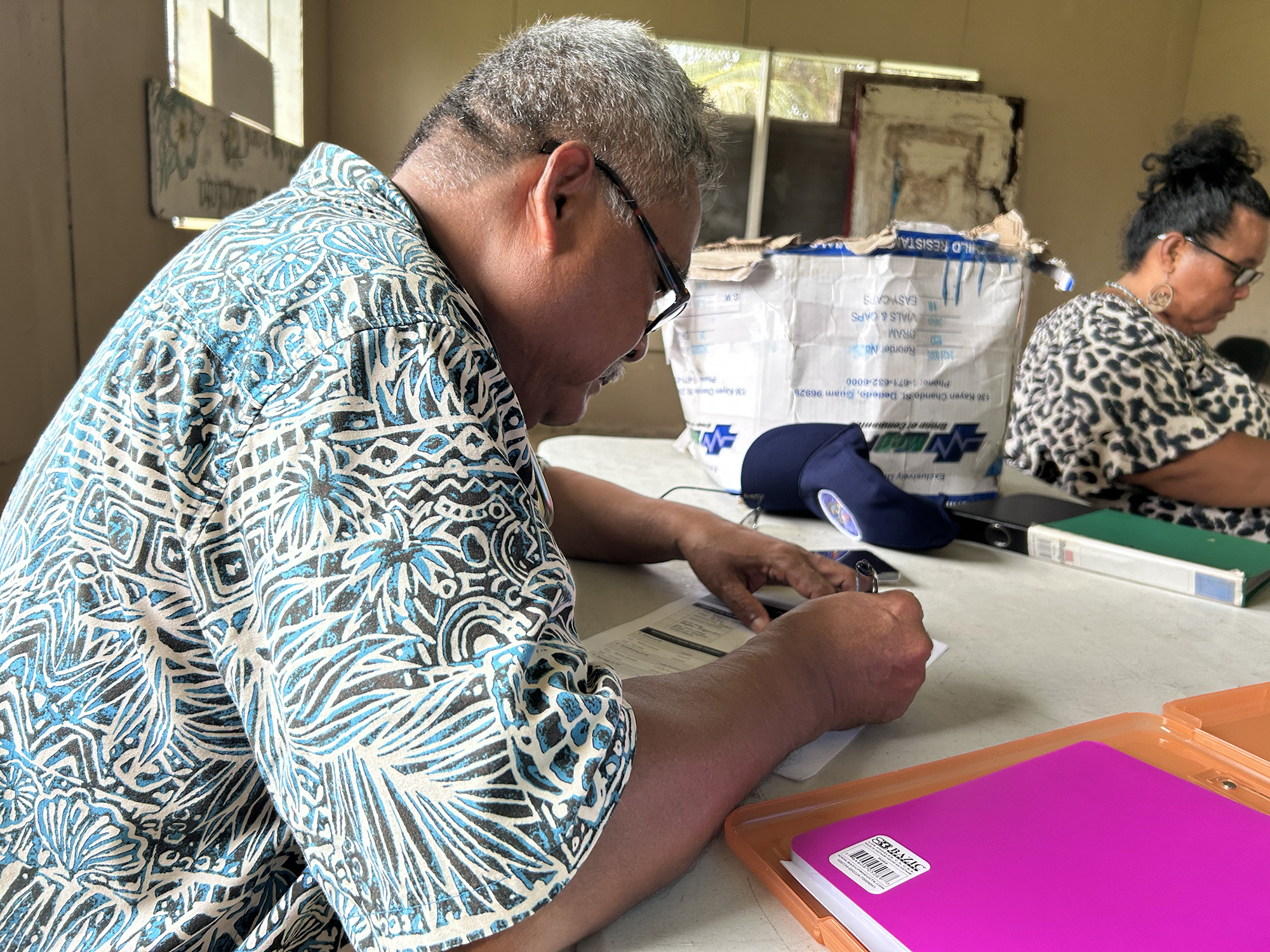 Photo caption: Dr Sebastian Defang, a physician for public health services with Chuuk State leads health assessments of affected communities in Faichuuk region. Credit: WHO / A. Johannes
Shyree Johnny, a practical nurse in the immunization programme within Chuuk’s Department of Health, has visited over 12 typhoon-affected villages since the onset of the typhoon to deliver vaccination catch-up services. “I have served over 300 community members in the last three weeks — providing routine immunization, influenza vaccines and Vitamin A,” she said.
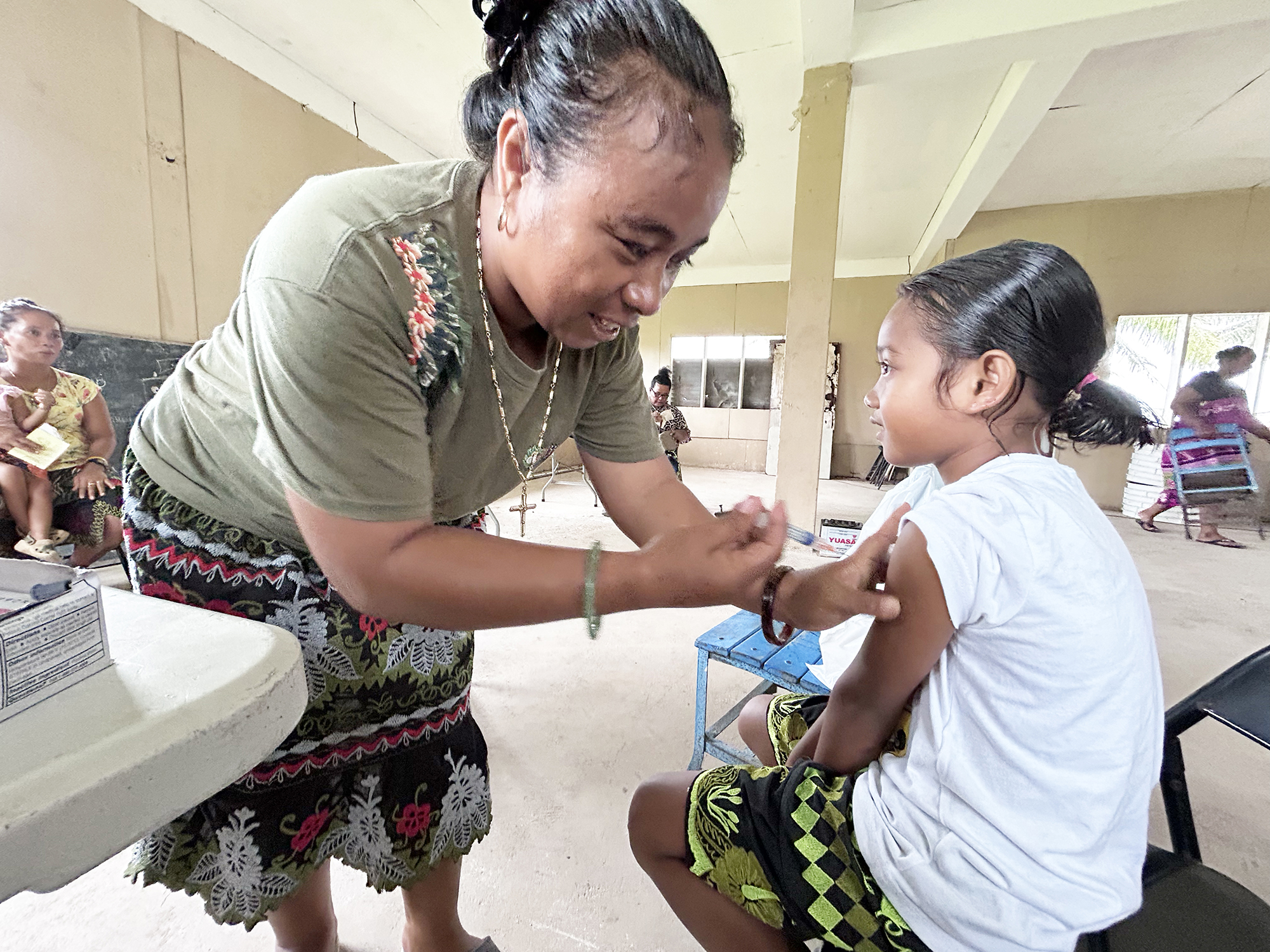 Photo caption: Shyree Johnny, a practical nurse in the immunization programme within Chuuk’s Department of Health Services, vaccinates a child during the outreach visit. Credit: WHO / A. Johannes
Dr Defang and Shyree are both part of health outreach teams, established by WHO in partnership with Chuuk's Department of Health Services, to assess the health impacts of Typhoon Sinlaku and deliver essential health services to affected communities.
Supporting Chuuk’s Disaster and Emergency Operations Centre
In addition to working with Chuuk's Department of Health Services, WHO also supported Chuuk's Disaster and Emergency Operations Centre and the work of its task force teams by providing a backup generator, early during the response.
“When Typhoon Sinlaku hit, our power lines were totally damaged and we had no power in Chuuk for over two weeks,” recalls Justin Fritz, Director, Chuuk Disaster and Emergency Operations Centre.
/countries/micronesia-federated-states-of/who_chuuk-eoc_generator.jpg?sfvrsn=389d665_1 "WHO_Chuuk EOC_generator") Photo caption: Justin Fritz, Director, Chuuk Disaster and Emergency Operations Centre thanks WHO for providing a backup generator. Credit: WHO / A. Johannes
Photo caption: Justin Fritz, Director, Chuuk Disaster and Emergency Operations Centre thanks WHO for providing a backup generator. Credit: WHO / A. Johannes
“WHO, in partnership with the Australian Government, provided a backup generator, early during the response. This resource will power our Disaster and Emergency Center and radio station during an emergency. So that we can activate our task force team, share live-saving information and deliver services to the public during any future emergency.”
From response to recovery
In the coming months, the response for health will require an evidence-based risk approach, informed by all the assessments undertaken. The ability to project and prepare for certain health risks — vector borne diseases, outbreaks of vaccine preventable diseases, and disruption in the continuity of NCD treatment — is vital. In this continuum, timely preventative actions will help save lives and prevent deaths and diseases.
As the health system recovers from this disaster, rebuilding a resilient health system is key. These events will keep happening, and interventions geared in reducing risks will require substantial investments. Typhoon-proofing dispensaries, training health staff to work with communities in early warning and rapid action and building a supply chain that covers for the population at any time will make the health sector resilient but also ready for any similar event in the future.
As climate-related disasters and extreme weather events accelerate across the Western Pacific Region, WHO has prioritized strengthening national emergency preparedness and response, including climate-resilient health systems.
This response effort was enabled through support from the Australian Department of Foreign Affairs and Trade (DFAT)/Australian Aid.