Collaboration
The Plague Unit of the Institut Pasteur of Madagascar is a WHO Collaborating Centre on Plague Control and Research. Their collaboration with WHO started in the 90s, and it has grown stronger year after year as a win-win situation for both institutions and the global fight against plague. 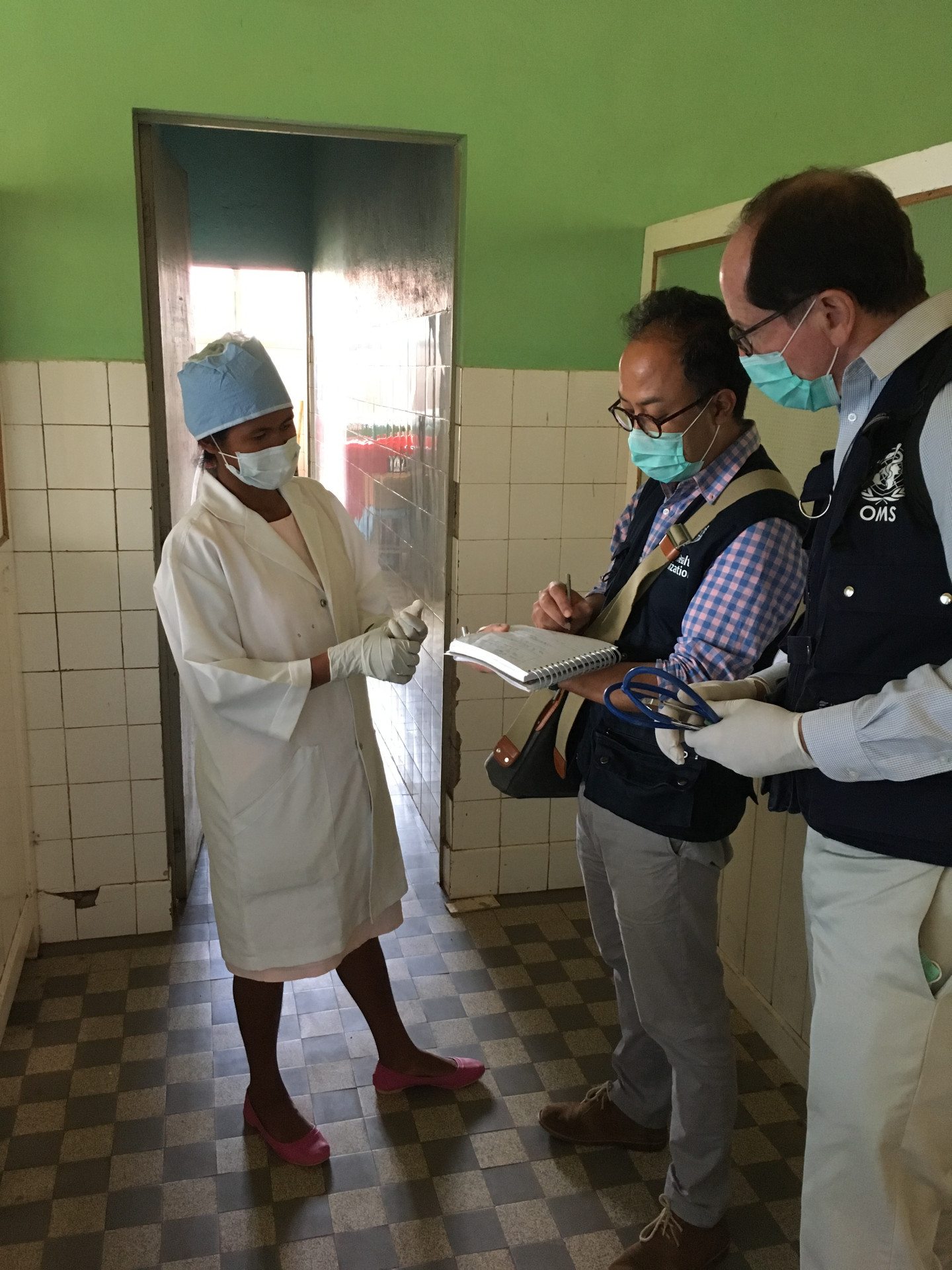
WHO has brought the normative leadership, technical guidance and operational support needed to help the Plague Unit at the institute strengthen national and regional laboratory capacity for plague diagnosis, while the centre contributed with on the ground expertise and production capability, notably hands-on experience in managing plague outbreaks and conducting clinical research; namely, laboratory diagnosis, pathogen characterization, epidemiology, patient care, infection prevention and control, risk communication and community engagement, and public health and social measures.
With WHO’s backing, the centre was able to produce and distribute rapid diagnostic tests, biological reference materials and standardized protocols, and its team played an active role in developing WHO guidelines and procedures.
This combination of WHO’s global mandate and the centre’s technical and manufacturing capacity proved essential for detecting, investigating and managing recent plague outbreaks in Madagascar, the Democratic Republic of the Congo and countries beyond the African region.
Contributions
The centre contributed to the creation of user instructions for the rapid diagnostic test, which were incorporated into WHO’s plague surveillance and control manual.
Through field research on rapid test performance, therapeutic comparisons and other operational studies, it also informed the updated WHO guidance on plague management.
Detailed descriptions of recent plague outbreaks were documented through WHO’s serial epidemiological publications.
Thanks to its advanced research capability, the centre has contributed to the development by WHO of evidence-based norms and standards by closing the knowledge gaps; worked with WHO on rapid control of outbreaks; and built a rich reference archive of Yersinia pestis strains.
Knowledge transfer
The collaboration resulted in an international training workshop that significantly strengthened global plague preparedness. Hosted at the Institut Pasteur of Madagascar in 2022, the International Course on Plague: laboratory diagnosis and surveillance brought together laboratory and public health professionals from multiple regions and built practical capacity for plague detection,laboratory confirmation and surveillance, especially in countries with endemic foci or recent cases. 
The course helped participating Member States apply the updated WHO plague case definition and meet International Health Regulations obligations.
This capacity-building exercise addressed the critical gaps identified in the 2017 pneumonic outbreak which had serious impacts on communities. It also reinforced technical competencies by covering advanced epidemiological tools, pathogen evolution, clinical management and vector and reservoir control.
Beyond the technical content, the workshop deepened partnerships across institutions,
strengthened links with the broader scientific network, and created a platform for high-level discussion on how diagnostic capacity connects to wider epidemic and pandemic preparedness, underscoring the need for integrated, multisectoral readiness for plague and other zoonotic threats.
Through this collaboration, WHO and the centre aim to extend their support to all endemic countries and strengthen their prevention, preparedness and response capacities.