Indonesia continues to face challenges in ensuring a well distributed and future ready nursing workforce. Although the nation has a strong supply of nurses with around 20 nurses per 10 000 population, gaps in education quality, employment pathways, service delivery and leadership remain. This requires coordinated action informed by strong data and global evidence.
Against this backdrop, the World Health Organization (WHO) supported the Ministry of Health to disseminate the State of the World’s Nursing 2025 and launch the Nursing Clinical Instructor curriculum on 11 December 2025 at Poltekkes Kemenkes Surabaya. The education institution is a part of Indonesia’s Health Polytechnic Network (Poltekkes), a WHO Collaborating Centre for Nursing and Midwifery Education and Development. This event aimed to share clear and practical evidence on the nursing workforce and to support action that responds to Indonesia’s priorities.
The programme featured a policy dialogue on the State of the World’s Nursing that brought together policymakers, educators, professional organisations, frontline nurses and students. Key presentations discussed global and regional overview of nursing workforce trends, Indonesia’s progress and remaining challenges, as well as nursing governance and competency development in the nation. Discussions centred on four priority areas: education, employment, service delivery and leadership. These themes reflect the core policy focus areas of the global nursing strategy and provided a framework for participants to consider how evidence can inform national action.
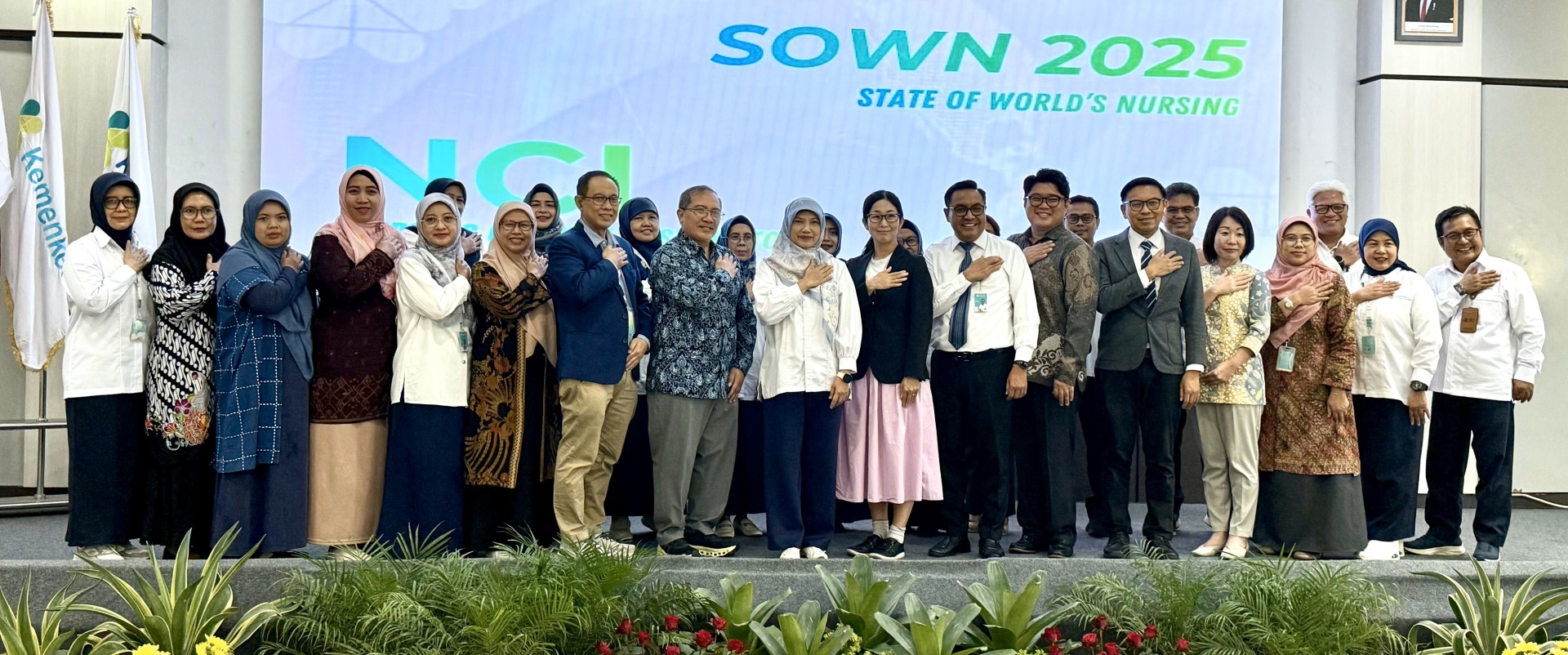
State of the World’s Nursing 2025 dissemination and Nursing Clinical Instructor launch was attended by representatives from the Ministry of Health, WHO, nursing leaders, educators and students. Credit: Poltekkes Kemenkes Surabaya
The event also marked the symbolic handover of the Nursing Clinical Instructor curriculum from the development team to the Director of the Poltekkes WHO Collaborating Centre. WHO supported the development of the curriculum by providing technical input and ensuring it reflects global standards and evidence, particularly in practical skills, clinical teaching and health workforce development. This support was provided in close collaboration with national partners to ensure the curriculum fits Indonesia’s needs. The updated curriculum builds on existing approaches and is expected to support a professional, effective and culturally sensitive clinical learning environment, helping improve the quality of nursing graduates and health services.
“Indonesia’s nurses are essential to advancing universal health coverage and strengthening primary health care. The State of the World’s Nursing 2025 offers evidence-based policy priorities to inform national dialogue and drive sustainable investments in nursing education, jobs, leadership and service delivery, towards a stronger, supported and future-ready nursing workforce,” said Dr Midori Anami Akimoto, Regional Nursing Officer, WHO Western Pacific Regional Office.
The dialogue also supports more equal access to health care by informing decisions on where and how nurses are trained and deployed. It also informs the implementation of initiatives such as the Nursing Clinical Instructor programme to improve the quality of clinical training and readiness of new graduates. This helps ensure nurses are better prepared and more evenly distributed across the health system.
WHO Indonesia will continue working with the Ministry of Health and partners to support the Nursing Clinical Instructor training, use the report’s findings in workforce planning and strengthen cooperation between education institutions, health services and policymakers.
Related documents:
Written by Zakiyah Eke, National Professional Officer (Health Workforce), WHO Indonesia